




1. Birth, Lineage, and Early Life
Hazrat Khwaja Qutbuddin Bakhtiyar Kaki (RA) was born in 1173 CE in the historic town of 'Ush' (Aush), located in the ancient Fergana Valley of Central Asia (modern-day Kyrgyzstan).
Sacred Lineage: He belonged to the noble Sayyid lineage, making him a direct descendant of the Prophet Muhammad (PBUH).
Hazrat Khwaja Qutbuddin Bakhtiyar Kaki (RA):
The Spiritual Sovereign of Delhi, Hazrat Khwaja Qutbuddin Bakhtiyar Kaki (RA): Life, Divine Love, and the
1. Birth, Lineage, and Early Life
Hazrat Khwaja Qutbuddin Bakhtiyar Kaki (RA) was born in 1173 CE in the historic town of 'Ush' (Aush), located in the ancient Fergana Valley of Central Asia (modern-day Kyrgyzstan).
Sacred Lineage: He belonged to the noble Sayyid lineage, making him a direct descendant of the Prophet Muhammad (PBUH).
Name and Titles: His birth name was 'Bakhtiyar' (meaning 'the fortunate one'. Later, in recognition of his towering spiritual stature, he was bestowed with the title 'Qutbuddin' (The Pivot/Lighthouse of Religion).
Early Loss and Education: He lost his father when he was just one and a half years old. His mother, a deeply pious woman, took charge of his early education. From early childhood, a profound inward-looking and deeply spiritual disposition was observable in young Bakhtiyar.
2. Spiritual Initiation and Discipleship
In his pursuit of spiritual wisdom, Khwaja Bakhtiyar Kaki (RA) eventually traveled to Baghdad, which was the global center of knowledge and Sufism at the time.
The Historic Oath: In the famous Abu Laith Samarkandi (RA) Mosque of Baghdad, he crossed paths with the master of the Chishtiya order, Hazrat Khwaja Moinuddin Chishti (RA). Deeply moved by the holy aura and luminous countenance of Khwaja Baba, the young Bakhtiyar took the oath of allegiance (Bay'ah) at his hands.
Rigorous Asceticism: Following his master’s guidance, he underwent years of rigorous spiritual training, fasting, and night-long vigils to purify his inner self. Immensely pleased with his beloved disciple's spiritual excellence, Khwaja Moinuddin Chishti (RA) conferred upon him the Khilafat (spiritual succession) of the Chishtiya order and commanded him to move to Hindustan to dedicate his life to human welfare.
3. Arrival in Delhi and the Devotion of Sultan Iltutmish
Abiding by his master's command, Khwaja Bakhtiyar Kaki (RA) moved first to Multan and later settled permanently in the Mehrauli region of Delhi. This was the era of the Mamluk Sultanate (Slave Dynasty) in Delhi.
The Sultan's Devotion: The ruling Sultan of Delhi, Shamsuddin Iltutmish, harbored profound reverence and affection for Khwaja Sahib. The Sultan even offered him the prestigious state position of 'Shaykh-ul-Islam' (the chief religious advisor of the royal court).
The Poor Man's Hut vs. The Royal Palace: Khwaja Kaki (RA) gracefully declined the Sultan's offer, refusing all worldly titles and administrative power. Eschewing the comforts of the royal palace, he chose to live in a modest mud hut in Mehrauli. This hut remained open to all—rich and poor, king and peasant alike. Sultan Iltutmish himself would frequently visit Khwaja Sahib like an ordinary citizen, sitting on the floor to receive spiritual instructions.
4. The Legend Behind the Title 'Kaki' and Its Spiritual Lesson
The reason behind the suffix 'Kaki' being attached to Khwaja Bakhtiyar's name is one of the most beautiful and legendary episodes in Sufi literature.
The Account: Khwaja Sahib was so detached from the material world (Zahid) that his household frequently faced extreme starvation. His wife used to buy bread on credit from a local baker. One day, the baker's wife arrogantly remarked to Khwaja Sahib's wife, "If we did not extend you credit, you would starve to death." Deeply humiliated, his wife narrated the incident to Khwaja Sahib. Smiling gently, Khwaja Sahib pointed to a corner of their small room and said, "From today, you do not need to ask anyone for anything. Whenever you need bread, take the name of the Almighty, lift the cloth from this corner, and take out the Kak (a Persian word for a type of dry baked bread)." Miraculously, for years to come, whenever the family or the Langar (free kitchen) required bread, fresh, warm bread would divinely appear from that corner.
The Scholarly Insight: The core spiritual and psychological lesson of this miracle is 'Tawakkul'—absolute reliance on the Creator. Sufism teaches that when a human being completely discards greed and ego, dedicating themselves entirely to divine love and human service, the unseen forces of the cosmos assume the responsibility of their sustenance.
5. The World-Famous 'Qutub Minar' and Khwaja Kaki
There is a common historical misconception that the world-famous UNESCO World Heritage Site, the 'Qutub Minar' in Delhi, was named solely after Sultan Qutbuddin Aibak. However, historical research reveals a different truth.
While the construction of the monument was initiated during the reign of Sultan Qutbuddin Aibak and completed by Sultan Iltutmish, the minaret was actually named out of deep reverence, love, and honor for the sovereign of the people's hearts—Hazrat Khwaja Qutbuddin Bakhtiyar Kaki (RA). Sultan Iltutmish named the structure 'Qutub Minar' to immortalize the memory of his spiritual master. It stands as historical proof that, during that era, the tower of spirituality and love was considered far taller than the tower of military might.
6. The Divine Union: Qawwali and the Flame of Ecstasy
The passing of this great saint in 1235 CE remains one of the most striking and mystically intense events in Sufi history. In Sufism, death is not viewed as an end, but rather as 'Urs'—the ultimate wedding or union of the soul with the Divine.
Surrender to the Mystic Verses: One day, Khwaja Sahib was attending a spiritual gathering (Sama) in Delhi where a Persian couplet by the famous Sufi saint Sheikh Ahmad Jam was being sung in the form of a Qawwali. The core verse was:
"Kushtagane khanjare tasleemra,
Har zaman az ghayb jaane deegrast."
(Translation: For the victims of the dagger of submission and surrender to the Divine Will, there is a new life bestowed upon them from the unseen world at every passing moment.)
Upon hearing this verse, an intense wave of spiritual ecstasy (Wajd) overwhelmed Khwaja Bakhtiyar Kaki (RA). He entered a state of profound divine rapture. For four consecutive days, whenever the Qawwals repeated this particular couplet, Khwaja Sahib would quiver in spiritual intoxication. Finally, on the 14th day of the Islamic month of Rabi-ul-Awwal, while completely immersed in the melody of this verse, he took his last breath and united with his Creator.
7. Historical and Social Significance: The Intercession of Mahatma Gandhi
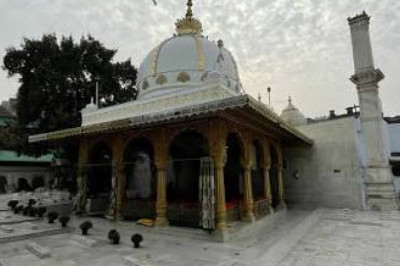
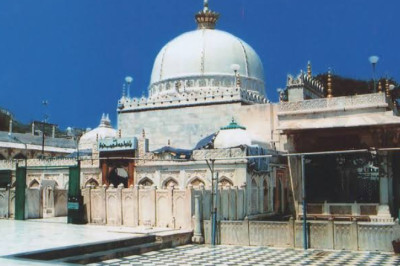
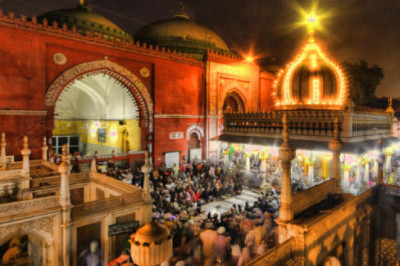
The shrine (Dargah) of Khwaja Bakhtiyar Kaki (RA) is located near the Zafar Mahal in Mehrauli, Delhi. Through the ages, this shrine has functioned as a grand symbol of interfaith harmony.
Mahatma Gandhi's Fast (1948): Following the painful partition of the subcontinent in 1947, severe communal riots erupted across Delhi. During this violence, certain miscreants desecrated and damaged parts of the holy Mehrauli Dargah. Mahatma Gandhi was profoundly heartbroken by this. In January 1948, when Gandhiji embarked on his historic fast-unto-death to restore peace, one of his non-negotiable conditions was: "The safety and sanctity of the Dargah of Khwaja Qutbuddin Bakhtiyar Kaki in Mehrauli must be fully guaranteed, and Muslims must be allowed to visit it without any fear." After breaking his fast, Gandhiji personally visited the shrine alongside people of all communities. This event stands as a monument to how influential Khwaja Kaki’s humanitarian legacy remained in safeguarding the secular fabric of the nation.
8. Lessons for the Readers of Sufibadi.com
In today’s polarized and turbulent world, the life of Khwaja Kaki (RA) provides three essential guideposts:
Renunciation of Ego and Power: Khwaja Sahib demonstrated that true human strength lies not in wealth, status, or authority, but in purity of character, humility, and inner peace.
Cultural Cohesion Through Art (Qawwali): Sufism successfully utilized music and poetry as mediums of divine worship, acting as a powerful tool to bridge linguistic and religious divides, bringing diverse groups together.
Creating a Sustained Legacy: Khwaja Kaki (RA) did not just attain individual enlightenment; he nurtured a lineage of phenomenal disciples, most notably Baba Fariduddin Ganjeshkar (RA), through whom the Chishtiya lineage eventually passed down to icons like Hazrat Khwaja Nizamuddin Auliya (RA) and Amir Khusrau.
The life of Hazrat Khwaja Qutbuddin Bakhtiyar Kaki (RA) teaches us that the core of Sufism lies far beyond superficial rituals; it is found in the profound love of the heart and empathy for all living beings. In a world currently fragmented by hatred and division, spreading the message of harmony, equality, and non-violence championed by this spiritual sovereign of Delhi is more urgent than ever.
O Most Merciful! Illuminate our hearts with the light of love and ttolerence that shone through Khwaja Bakhtiyar Kaki (RA).

![Data Ganj Bakhsh [ Hazrat Ali Hujwiri (RA) ]](https://www.sufi.news/upload/media/posts/2026-09/10/data-ganj-bakhsh-hazrat-ali-hujwiri-ra_1789055296-s.jpg)



Comments
0 comment